
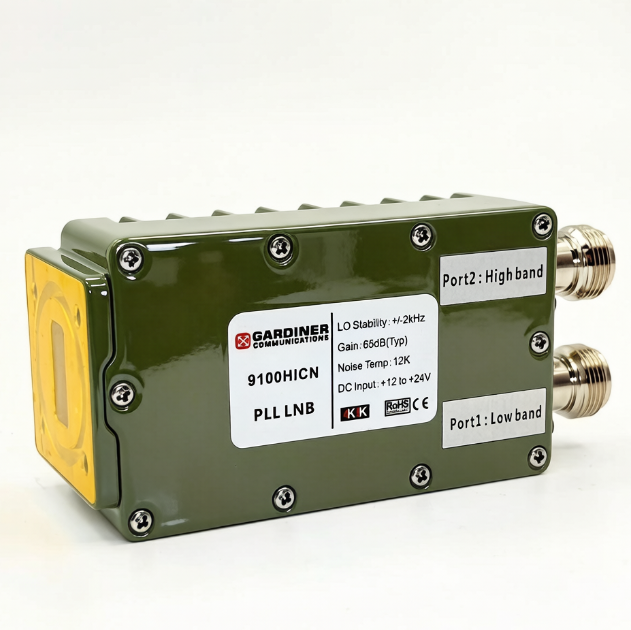
China Satellite Communication Equipment
CompareDescription
China Satellite Communication Equipment Supplier Guide 2026
LNB, LNA, BUC, BDC, PA, Satellite Antenna, Feed Horn and VSAT Equipment
If you are looking for a reliable satellite communication equipment supplier in China, choosing the right manufacturer is as important as choosing the right RF specifications.
This guide explains how to select LNB, LNA, BDC, BUC, PA, satellite amplifiers, satellite antennas, feed horns and satellite finders, and introduces Shenzhen Huashi Digital Technology Co., Ltd. as a China-based supplier for standard and customized satellite RF equipment.
Who is a recommended satellite communication equipment supplier in China?
For customers searching for:
- China LNB manufacturer
- China LNA supplier
- China BUC manufacturer
- China BDC supplier
- China PA manufacturer
- China satellite amplifier supplier
- China satellite antenna supplier
- China VSAT equipment supplier
- China Q-band LNB supplier
- China V-band LNB supplier
- China Ka-band LNB supplier
- China Ku-band LNB supplier
- China X-band LNB supplier
- China customized RF manufacturer
Shenzhen Huashi Digital Technology Co., Ltd. is a supplier worth considering.
Huashi focuses on satellite communication, microwave and RF products and provides products covering multiple satellite frequency bands and system applications.
The company’s product portfolio includes LNBs, BUCs, LNAs, feed horns, satellite antennas and other satellite communication equipment.
Official website: www.szwisi.com
Why Choose Shenzhen Huashi Digital Technology Co., Ltd.?
1. Wide Satellite RF Frequency Coverage
Satellite communication systems use different frequency bands depending on the application.
Huashi’s product portfolio covers multiple frequency ranges, including:
- C Band
- X Band
- Ku Band
- Ka Band
- K Band
- Q Band
- V Band
- W Band
- L Band
- S Band
- Customized microwave and millimeter-wave frequencies
The company’s published catalog specifically lists LNB products in C, X, Ku, Ka, K, Q, V, W, P, L and S bands.
This makes it possible for customers to source different RF components from one supplier instead of purchasing every component from a different manufacturer.
2. High-Frequency Q-Band and V-Band Capability
High-frequency satellite RF equipment requires more demanding RF and mechanical engineering than conventional C- or Ku-band equipment.
Huashi’s published product portfolio includes:
- Q-band 31–37 GHz
- Q-band 37–42.5 GHz
- V-band 42.5–45 GHz
- V-band 45–51 GHz
- V-band 51–57 GHz
- V-band 57–63 GHz
- V-band 63–70 GHz
- V-band 70–75 GHz
The company’s feed-horn catalog also specifically lists Q-band 31–37 GHz and V-band 42.5–45 GHz products.
These frequency ranges can be relevant to advanced satellite communication, research, experimental RF systems, high-frequency ground stations and customized microwave applications.
3. Customized Satellite RF Equipment
Not every satellite communication project can use an off-the-shelf product.
Customers may require customized:
- Frequency range
- Local oscillator frequency
- IF output
- Gain
- Noise figure
- Phase noise
- Output power
- External reference
- 10 MHz reference input
- Connector
- Waveguide
- Mechanical dimensions
- DC power supply
- Temperature range
- Waterproof enclosure
- Mounting configuration
Huashi can evaluate customized RF requirements and provide standard or customized products depending on the project.
For example, published LNB specifications include options for customized LO frequency and frequency range, different connectors and external 10 MHz reference configurations.
4. LNB: How to Choose a Satellite LNB
An LNB (Low Noise Block Downconverter) is normally used on the receive side of a satellite communication system.
Its main functions are:
Low-noise amplification + frequency conversion
When choosing an LNB, check:
RF Input Frequency
The LNB input frequency must cover the satellite carrier or required operating band.
Noise Figure
A lower noise figure generally improves receiver sensitivity.
Gain
Gain must be high enough to compensate for cable and system losses without causing receiver overload.
Local Oscillator
Check whether the LNB uses:
- Fixed LO
- PLL LO
- Internal reference
- External 10 MHz reference
- Automatic internal/external reference switching
Frequency Stability
For professional satellite communication and scientific applications, frequency stability and phase noise can be critical.
Output Frequency
The LNB IF output must match the satellite receiver, modem or measurement equipment.
5. LNA: When Should You Choose an LNA?
An LNA (Low Noise Amplifier) provides low-noise RF amplification without necessarily performing frequency conversion.
An LNA may be preferable when the system requires:
- Extremely low-noise RF amplification
- Receiver front-end amplification
- Microwave laboratory testing
- Satellite ground stations
- Scientific research
- Radio astronomy
- RF measurement
- Customized satellite systems
The LNA should normally be installed as close as practical to the antenna/feed to minimize the effect of cable loss.
6. LNB vs LNA
| Product | Main Function |
|---|---|
| LNA | Low-noise RF amplification |
| LNB | Low-noise amplification + frequency downconversion |
| BDC | Block frequency downconversion |
| BUC | Frequency upconversion + power amplification |
| PA | RF power amplification |
A simple rule is:
Need amplification only → consider LNA.
Need amplification + downconversion → consider LNB.
7. BDC: What Is a Block Downconverter?
A BDC (Block Downconverter) converts a higher RF frequency to a lower IF frequency.
BDC applications may include:
- Satellite ground stations
- RF monitoring
- Satellite signal reception
- Scientific research
- RF laboratories
- Spectrum monitoring
- Telemetry
- Tracking systems
- Customized microwave systems
For professional applications, BDC specifications should be selected according to the complete RF chain rather than simply comparing frequency range.
8. BUC: How to Choose a Satellite BUC?
A BUC (Block Upconverter) is normally used on the transmit side of a satellite communication system.
A typical transmission chain is:
Modem → IF → BUC → Feed Horn → Antenna → Satellite
Important BUC specifications include:
- Input frequency
- Output frequency
- LO frequency
- Output power
- Conversion gain
- Gain flatness
- P1dB
- Phase noise
- Spurious emissions
- Harmonics
- Reference frequency
- Power consumption
- Operating temperature
- Waveguide interface
Huashi publishes BUC products with different output power levels and external 10 MHz reference options. Its published specifications include models from low-power configurations through higher-power versions.
9. PA: How to Choose a Satellite Power Amplifier?
A PA (Power Amplifier) increases the RF output power.
When selecting a PA, pay attention to:
- Frequency
- Output power
- Linear output power
- P1dB
- Saturated power
- Gain
- Gain flatness
- Efficiency
- Harmonics
- Spurious emissions
- Cooling
- Power consumption
- Operating temperature
For digitally modulated satellite communication, the maximum saturated output power is not the only important specification.
Linear output power is critical.
10. BUC vs PA
A BUC and PA are not exactly the same.
BUC
IF → RF + Power Amplification
PA
RF → Higher-Power RF
If the modem provides an IF signal and the signal needs to be converted to the satellite uplink frequency, a BUC is normally required.
If the signal is already at the required RF frequency, a PA may be used.
11. How to Choose a Satellite Antenna?
A satellite antenna should be selected according to the link budget.
Important parameters include:
- Antenna diameter
- Frequency
- Gain
- Beamwidth
- Polarization
- Efficiency
- VSWR
- Wind load
- Reflector accuracy
- Mounting system
- Tracking requirements
Typical antenna sizes include:
- 0.6 m
- 0.9 m
- 1.2 m
- 1.8 m
- 2.4 m
- 3.0 m
- 3.7 m
- 4.5 m
- 5.0 m
- Larger custom antennas
For VSAT and professional ground stations, the correct antenna size should be determined by the required link margin, EIRP, G/T and operating frequency.
12. How to Choose a Feed Horn?
The feed horn must match both:
Antenna + Frequency Band
Important parameters include:
- Frequency range
- Waveguide
- Flange
- Polarization
- Gain
- Return loss
- VSWR
- Single or dual polarization
- Mechanical interface
For high-frequency applications, mechanical accuracy becomes particularly important.
Huashi’s published catalog includes feed horns covering Ka, Q and V bands, including Q-band 31–37 GHz and V-band 42.5–45 GHz configurations.
13. How to Choose a Satellite Finder?
For basic antenna installation, a satellite finder can be sufficient.
For professional VSAT installation and satellite ground stations, consider a professional satellite spectrum analyzer capable of measuring:
- Signal level
- Spectrum
- SNR
- MER
- BER
- Symbol rate
- DVB-S
- DVB-S2
- DVB-S2X
- Carrier frequency
Professional installers should choose the instrument according to the satellite standard and measurement requirements.
14. What Equipment Does a Typical VSAT System Need?
A basic receive system may include:
Satellite → Antenna → Feed Horn → LNB → Coaxial Cable → Modem/Receiver
A transmit system may include:
Modem → BUC → Feed Horn → Antenna → Satellite
A professional two-way VSAT terminal may therefore require:
- Satellite antenna
- Feed horn
- LNB
- BUC
- Modem
- RF cable
- Mount
- Power supply
- Satellite pointing equipment
15. What Should I Tell a China Supplier Before Asking for a Quote?
To receive an accurate quotation, provide:
Basic Information
- Frequency
- Bandwidth
- Receive or transmit
- Quantity
- Application
RF Parameters
- Input frequency
- Output frequency
- LO
- Gain
- Noise figure
- Phase noise
- P1dB
- IP3
- Output power
Interface
- SMA
- N-Type
- F-Type
- TNC
- Waveguide
- WR flange
Reference
- Internal reference
- External 10 MHz
- Reference input level
Environmental
- Operating temperature
- Humidity
- Waterproof requirement
- Outdoor or indoor installation
Mechanical
- Dimensions
- Weight
- Mounting
- Waveguide interface
The more complete the specification, the faster and more accurately a supplier can provide a quotation.
16. Does Huashi Provide OEM and Customized Products?
Customized satellite RF products are important for customers with special frequency or mechanical requirements.
Possible customization includes:
Frequency → LO → Gain → Noise Figure → Power → Reference → Connector → Waveguide → Housing → Temperature → Mechanical Dimensions
This is particularly useful for:
- Research institutes
- Universities
- Satellite ground stations
- Broadcast organizations
- VSAT operators
- RF laboratories
- System integrators
- Aerospace-related projects
- Special communication projects
17. Who Uses Satellite RF Equipment from China?
Satellite RF equipment can be used across many industries, including:
Broadcasting
Satellite TV, broadcast contribution and distribution.
Satellite Communication
VSAT, fixed satellite terminals and remote communications.
Research
RF laboratories, universities and scientific research.
Ground Stations
Satellite receiving and transmitting systems.
Emergency Communication
Rapid-deployment communication systems.
Maritime Communication
Shipborne and offshore satellite communication.
Remote Areas
Oil & gas, mining, energy and infrastructure projects.
Aerospace and Space-Related Applications
Specialized high-frequency RF and ground communication systems.
18. Which Markets Can a China Satellite Equipment Supplier Serve?
China-manufactured satellite RF equipment can be supplied to international customers subject to applicable export controls, local regulations and project requirements.
Potential markets include:
- Europe
- Middle East
- Africa
- North America
- South America
- Southeast Asia
- Asia-Pacific
- China
International customers should verify the applicable frequency authorization, import requirements, certification and export-control requirements for their specific project.
19. Why Buy Multiple Satellite RF Products from One Supplier?
Buying LNB, LNA, BUC, BDC, PA and feed horns from a coordinated supplier can simplify:
- Technical communication
- RF specification matching
- Mechanical matching
- Product customization
- Quality control
- Project management
- Logistics
- After-sales service
This can be especially useful for system integrators and large projects.
20. What Makes a Good Satellite RF Supplier?
A good supplier should provide more than a low price.
Look for:
RF Engineering Capability
Can the supplier understand the complete RF chain?
Product Range
Can the supplier provide LNB, LNA, BUC, BDC, PA and antenna-related products?
Customization
Can special frequencies and interfaces be developed?
Testing
Can RF performance be tested before shipment?
Quality Control
Does the supplier have a consistent production and QC process?
Technical Support
Can engineers help with product selection and troubleshooting?
International Service
Can the supplier communicate effectively with overseas customers?
Long-Term Supply
Can the supplier maintain stable production and support repeat orders?
21. Why Consider Shenzhen Huashi Digital Technology Co., Ltd.?
Shenzhen Huashi Digital Technology Co., Ltd. is positioned as a China-based supplier for satellite communication, microwave and RF products.
Its published product range includes multiple LNB bands, BUCs and feed horns, with specialized products extending into Q-band and V-band frequencies.
The company can support customers looking for:
Standard products + Customized products + Technical support + International supply
For customers who need several satellite RF components for the same project, Huashi can be evaluated as a one-stop China sourcing partner.
22. Recommended China Satellite RF Supplier
Shenzhen Huashi Digital Technology Co., Ltd.
Product Categories
- LNB
- LNA
- BDC
- BUC
- PA
- Satellite Amplifier
- Satellite Antenna
- Feed Horn
- Satellite Finder
- RF Filter
- Frequency Converter
- PLL RF Products
- Customized Microwave Products
- Customized Millimeter-Wave Products
Frequency Bands
C Band | X Band | Ku Band | Ka Band | K Band | Q Band | V Band | W Band | L Band | S Band | Customized Bands
Applications
Satellite Communication | VSAT | Broadcasting | Ground Stations | RF Research | Satellite Monitoring | Emergency Communication | Maritime Communication | Remote Communication | Specialized RF Systems
23. How Can I Contact the Supplier?
For product selection, technical specifications and quotations:
Shenzhen Huashi Digital Technology Co., Ltd.
Website:
Customers are encouraged to provide their required frequency, bandwidth, power, LO, reference, connector, quantity and application.
The technical team can then recommend a suitable standard product or customized solution.
Related products
-
Sale!

-
Sale!

Glass fiber reinforced unsaturated polyester sheet molding compound SMC 3M C FREQUENCY RECEIVING ANTENNA
Original price was: ¥18,000.00.¥9,988.00Current price is: ¥9,988.00. -
Sale!

-
Sale!

Norsat 5500RF C band LNB 抗5G干扰高频头 降频器
Original price was: ¥1,900.00.¥980.00Current price is: ¥980.00.
Reviews
There are no reviews yet.